
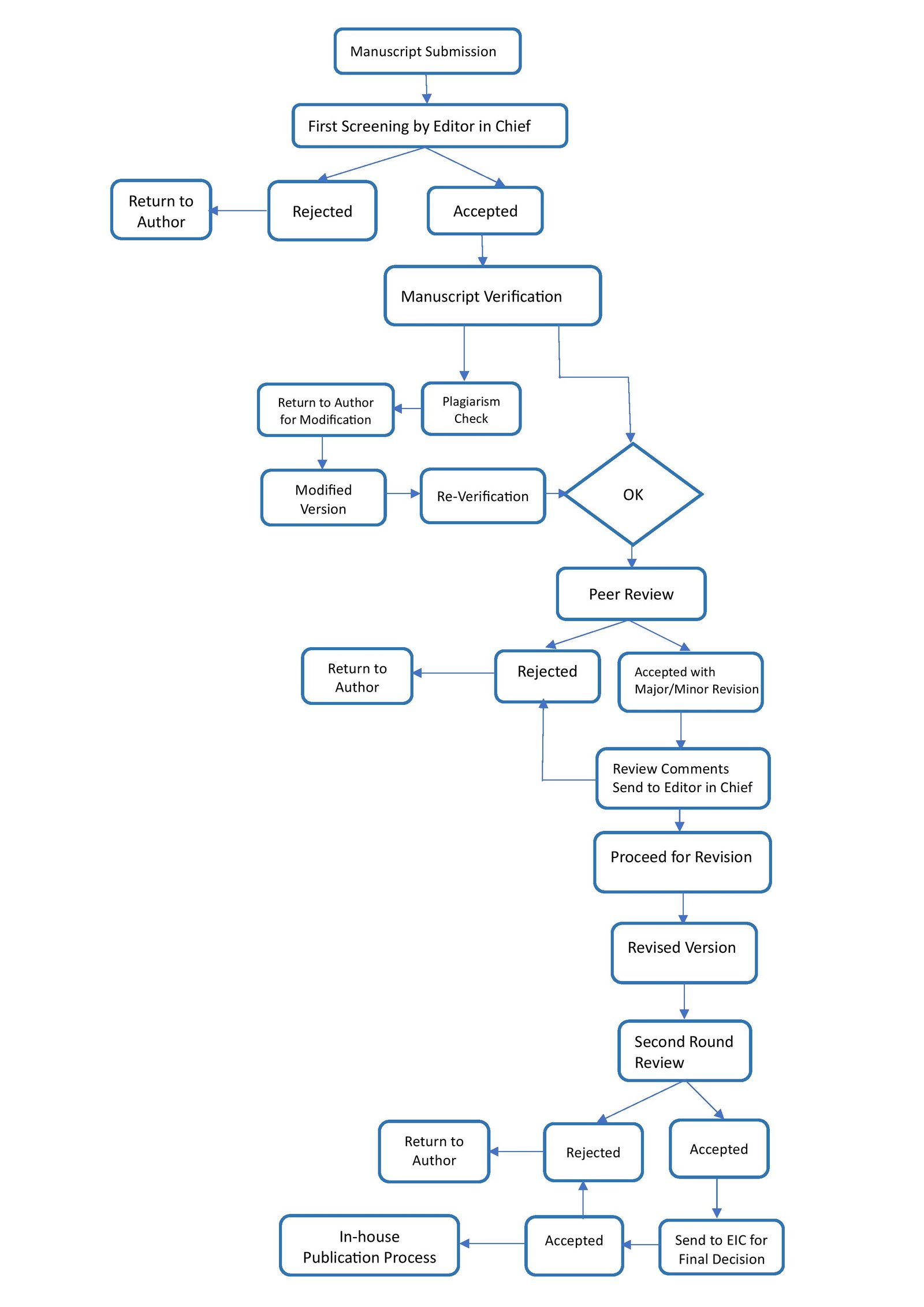
Double-blind-Peer-Review is a process of evaluating and analysing the academic research papers or articles in which the identity of both the author and the reviewers is kept anonymous. This is done to minimize bias and ensure that the evaluation is based solely on the quality and merit of the research presented in the paper. In this process, neither the author knows who the reviewers are nor do the reviewers know the identity of the author. Double-blind-peer-review is considered a stricter and fair method of evaluating research compared to single-blind peer review, in which the reviewers know the identity of the author.
Providing specialized solutions for academic and research excellence.
Learn how to choose the best journal for your research publication....
Learn MoreUnderstand the benefits of open access publishing for wider reach and visibility....
Learn MoreClarify authorship roles and responsibilities in your academic paper....
Learn MoreStep-by-step guide to successfully submitting your manuscript for review....
Learn MoreLearn how the double-blind peer review process ensures fair and unbiased evaluation....
Learn MoreUnderstand the production process, including formatting and finalizing your paper for publication....
Learn MoreDiscover what happens after publication, including promotion and citation tracking....
Learn MoreComprehensive academic conference support and publication solutions.
End-to-end support for organizing academic conferences, ensuring seamless execution from title finalization to post-publication processes in top-tier platforms.
View DetailsGet conference papers published in our journals. We provide full support for rigorous peer-review and scientific quality assessment to ensure high publication standards.
View DetailsPublication of conference abstract books with international identifiers (ISBN & DOI). Supports up to 100 abstracts per volume with professional formatting.
View DetailsExpert guidance for publishing in prestigious international journals (Q1-Q4) and globally recognized platforms like IEEE Xplore, Springer, and Elsevier.
View Details